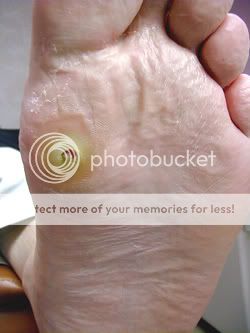
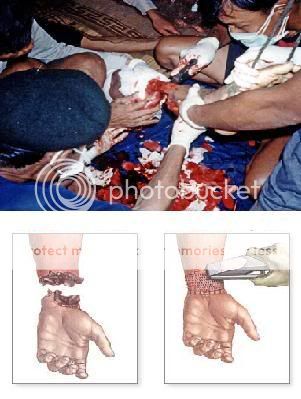
Types of Open Wounds:

1. scratches/ abrasions
2. laceration - regular and irregular


3. penetration and puncture wounds
4. avulsion
5. amputations


6. crushing injury (may be open or closed)


7. gunshot wounds

 
8. impaled objects


Dressing - any material used to cover a wound that helps control bleeding and aid in the prevention of additional contamination.
Bandage - any material used to hold a dressing in place.
Occlusive
dressing - any water - resistant material (plastic or waxed paper) applied to a wound to prevent the entrance of air and the loss of moisture from internal organs.
Bulky
dressing - multiple stacked dressing made to form a single dressing 2-3 cm thick, such as a sanitary towel or any simila material.

When applying a bandage and dressing you should be able to:

1. Control bleeding.
2. Apply the dressing using aseptic technique.
3. Cover the wounds completely.
4. Ensure that the dressing and the bandage are firm, fixed and comfortable, but not so tight as to effect circulation
5. Ensure there are no losse ends that can get caught.
6. Avoid covering the fingertips.

Drowning


  • Pull the victim out of the water and place him on land or the deck of the boat.
  • If he/she is coughing or sputtering, it means that the victim is breathing. Put him in the recovery position. This drain the water from his lungs and airways.
  • If the victim is not breathing but there is a pulse, do mouth-to-mouth resuscitation.
  • If the victim is not breathing and there is no pulse, do cardiopulmonary resuscitation or (CPR).

Electric Shock

    A person who accidentally touches frayed wires or faulty electrical appliances with wet hands or while standing on a wet ground will get an electric shock. A mild shock is merely painful, but a severe shock is life threatening.
  • The first thing to do is cut off the electrical current by pulling out the plug or switching off the power mains.
  • If this cannot be done, push the victim away from the point of contact with wooden or rubber – coated object (ex. Baseball bat, chair). Do not used metallic object. Stand on insulating material, such as phone book, while doing this.
  • Make sure that you do not come in direct contact with the source of electrical current or with the victim until he has been separated from the source of shock.
  • If the victim is breathing put him in the recovery position.
  • If he is not breathing but there is a pulse, do mouth-to-mouth resuscitation.
  • If the victim has no breathing and there is no pulse, do cardiopulmonary resuscitation or (CPR).
  • If there are burns, treat them.
  • If the shock comes from high-voltage source (ex. Power mains, electric train rails, etc), do not approach or attempt to rescue the victim. Maintain a distance of at least 18 meters. Go for expert help.